
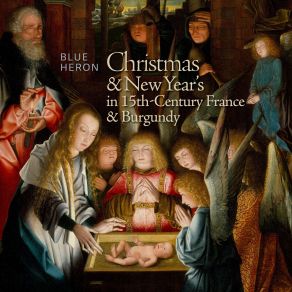
Blue Heron and Scott Metcalfe bring Christmas and New Year's In 15th-Century France & Burgundy to a program built around late medieval repertory for the season. Released in 2024, the album moves between sacred and secular pieces in classical style, with 16 tracks spread across 1:09:14. The selection includes familiar liturgical openings such as O Clavis David, O Virgo Virginum, and Conditor Alme Siderum, alongside carol-like and courtly French items that widen the picture of winter celebration in Burgundy and France.
The sequence gives a clear sense of how holiday music could move through different social settings. Ave Maria Gratia Dei Plena, O Admirabile Commercium, and Letabundus sit next to Gloria Spiritus Et Alme and Nato Canunt Omnia, while the French-language tracks La Plus Belle Et Doulce Figure, Dieu Vous Doinst Bon Jour Et Demy, and Auxce Bon Youre Delabonestren add a more intimate regional character. The result is an album that feels rooted in manuscript tradition, yet varied enough to serve as a focused winter listening program.
There is also a strong New Year dimension in the closing track, Ce Jour De l'an Qui Maint Doist Entrenier, which gives the album a direct link to the turn of the year. That placement makes the program especially useful for seasonal playlists that extend beyond Christmas Day into the first days of January. Rather than leaning on modern holiday arrangements, the album stays with medieval texts and titles that suggest devotion, celebration, and the social life of winter in 15th-century Burgundy.
Blue Heron and Scott Metcalfe shape the repertoire with attention to contrast across the 16-track set. The repeated appearance of O Virgo Virginum and the presence of pieces such as Amours Servir Et Honnourer and Dame Excellent underline the mix of sacred devotion and courtly expression. Because the album spans more than an hour, it works well as one extended seasonal listen, giving space for the different moods of Advent, Christmas, and New Year's listening to unfold without rushing the material.
For listeners building a holiday collection around early music, Christmas and New Year's In 15th-Century France & Burgundy offers a specific historical focus and a clear seasonal frame. Its mix of Latin chant-based titles and French vernacular pieces makes it easy to place beside other winter albums, especially when the aim is to keep the atmosphere reflective rather than festive in a modern sense. The program feels carefully ordered, with each track contributing to the album's view of year-end music in late medieval France and Burgundy.